TRANSITION360™ / MERGERS, ACQUISITIONS & DIVESTMENTS
M&A & divestments.
Led through execution.
Acquisitions, integration, carve-outs and separations. Experienced leaders, reusable templates and a coordinated view of the work—from diligence to Day 1, transition services agreement (TSA) exit and stabilization.
THE METHOD. A SHARED OPERATING VIEW.
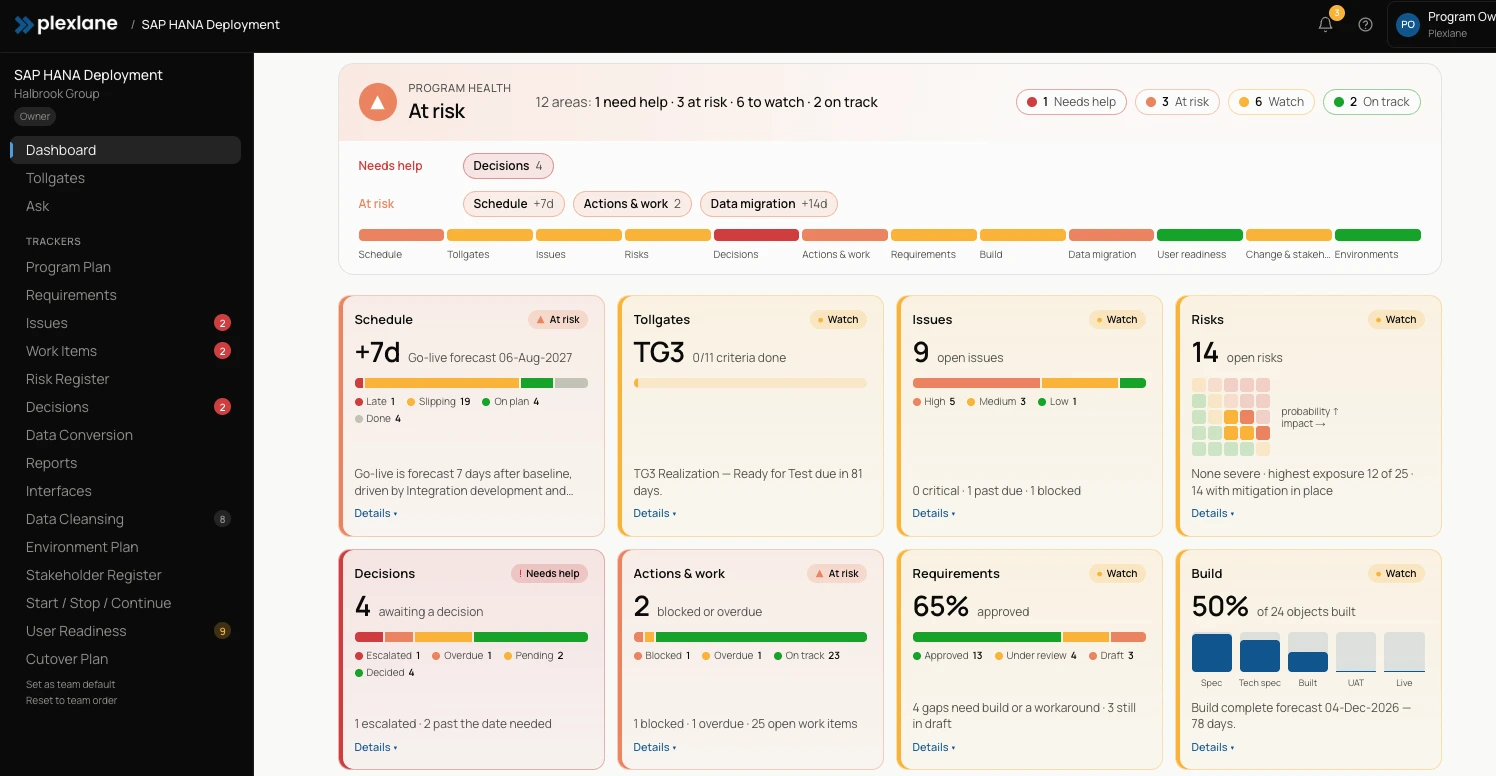
Illustrative Transform360™ platform view. Demonstration program data.
Day 1 readinessTransition governanceTSA exit
ACQUIRE & INTEGRATE
Make the combined
business work.
Connect the acquired business to the operating model without losing sight of continuity, security and ownership.
- Technology diligence and integration decisions
- ERP, application and infrastructure transition
- Business readiness, adoption and stabilization
CARVE OUT & DIVEST
Separate with
a clear destination.
Untangle shared dependencies and establish the services, people and decisions needed for a viable separation.
- Shared-service and information dependencies
- Stand-up, migration and separation workstreams
- TSA oversight, exit readiness and operating ownership
WHAT CLIENTS VALUE
Experience that shows up
in the work.
Clients recognize the depth of the questions, the discipline in the templates and the ability to keep execution moving against demanding deal calendars.
01
Knowledge that gets practical.
An understanding of integration and separation issues that surfaces dependencies and decisions before they become late surprises.
02
Templates that remember.
Repeatable plans, readiness criteria and tracking logs shaped by decades of lessons, then adapted to the transaction.
03
Execution against the deal clock.
Experienced leaders who set priorities, surface trade-offs and coordinate action under aggressive timelines.
Paraphrased themes from client feedback; not verbatim quotations.
TRANSACTION OFFERINGS
Choose the work that needs
an accountable owner.
Eight focused offerings span the transaction lifecycle. Engage Plexlane for a defined workstream, a transition management office, or executive leadership across the program.
01 / EVALUATE & DECIDE
Establish the
transaction picture.
Make technology dependencies visible before transaction decisions.
What we do
- Review applications, infrastructure, security, technical debt and operational maturity.
- Evaluate scalability, critical dependencies and technology risks relevant to the transaction.
Typical engagement outputs
A technology findings brief, risk priorities and questions requiring transaction decisions.
Define how the combined technology environment should operate.
What we do
- Establish the integration model, governance and target operating responsibilities.
- Evaluate application disposition, platform consolidation and infrastructure integration choices.
Typical engagement outputs
Integration principles, platform decisions and sequenced workstreams.
02 / TRANSITION SYSTEMS & OPERATIONS
Carry the change
into the business.
Turn shared dependencies into a controlled separation sequence.
What we do
- Map application, infrastructure, user and service dependencies and TSA needs.
- Define separation workstreams, transition sequencing and readiness requirements.
Typical engagement outputs
A separation dependency register, TSA exit requirements and cutover readiness criteria.
Coordinate enterprise systems through integration or separation.
What we do
- Lead scoped integration, consolidation, migration or separation of ERP and business applications.
- Coordinate platform responsibilities, interface and data dependencies, and business readiness.
Typical engagement outputs
An application transition plan, migration acceptance criteria and stabilization responsibilities.
Keep access and information protection aligned as the business changes.
What we do
- Assess transition-related security exposure and changing information boundaries.
- Coordinate and validate agreed access, protection and resilience controls.
Typical engagement outputs
A transition risk register, control-change evidence and unresolved security decisions.
Move services and users with clear readiness and support ownership.
What we do
- Coordinate cloud, infrastructure, identity, collaboration, endpoint and network transitions within the agreed estate.
- Define user readiness, cutover and recovery criteria, and operational handover.
Typical engagement outputs
A service migration schedule, readiness actions and support handover responsibilities.
03 / GOVERN & LEAD
Keep decisions
and delivery moving.
Give shared transition services clear owners and exit decisions.
What we do
- Establish transition governance, TSA service oversight and dependency tracking.
- Maintain escalation, exit decisions and executive reporting across workstreams.
Typical engagement outputs
A TSA service and owner register, exit tracking and transition decision logs.
Provide senior technology direction through transaction and transition work.
What we do
- Align stakeholders around technology strategy, operating priorities and transformation decisions.
- Provide executive oversight and governance through the agreed transition period.
Typical engagement outputs
A leadership mandate, executive decision cadence and accountable workstream ownership.
TRANSFORM360™ / THE DELIVERY METHOD, MADE VISIBLE
One program view.
Fewer disconnected conversations.
Bring plans, risks, decisions, requirements and readiness into a shared operating picture. The platform supports the program conversation; accountable leaders still own the decisions.
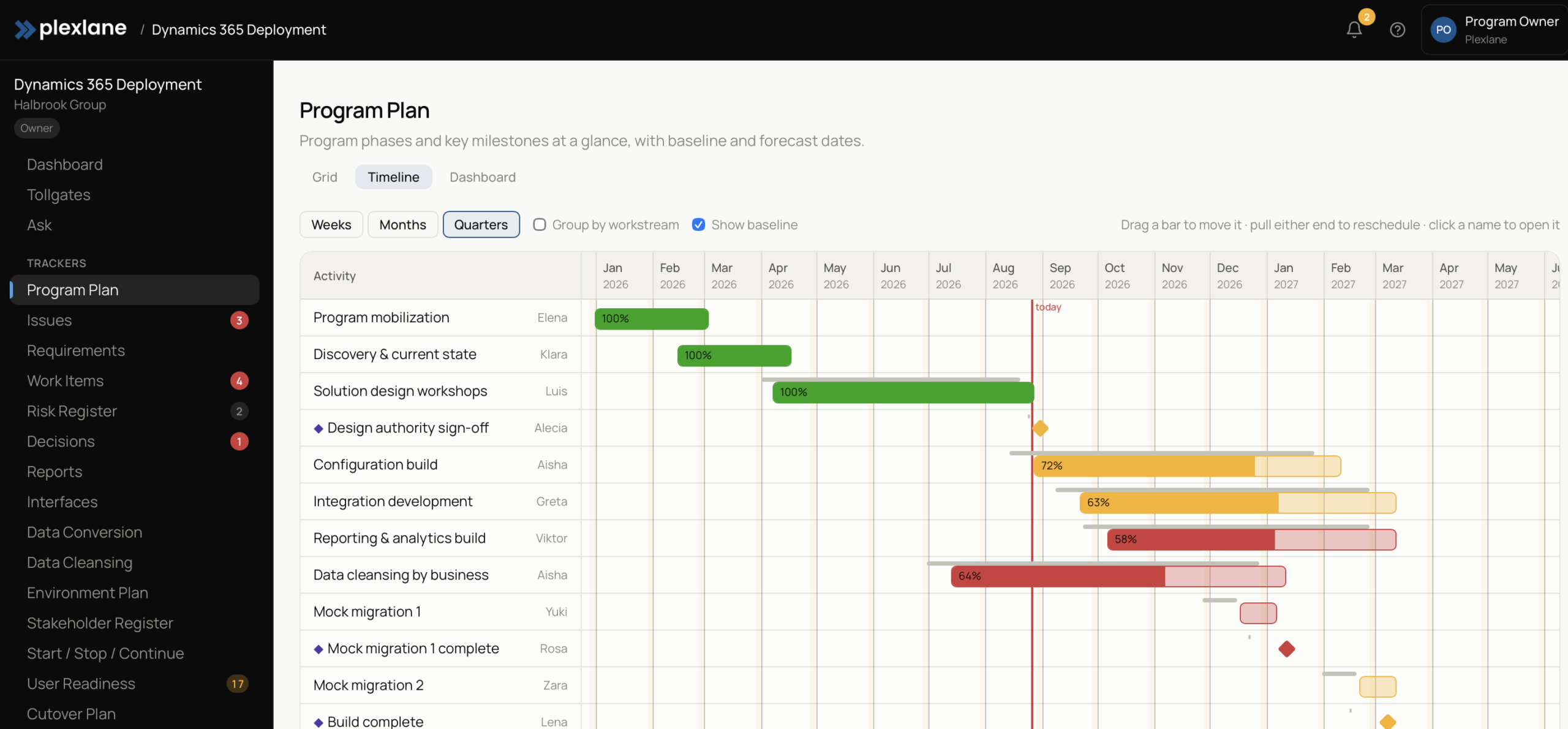
Illustrative Transform360™ program-plan view. Program data shown is for demonstration.
Know what is ready.
Use agreed tollgates and readiness criteria to focus the discussion on evidence before the next transition.
Know what needs a decision.
Keep risks, issues, actions and executive decisions connected to accountable owners and program dependencies.
Keep one delivery baseline.
Bring schedules, workstreams and forecasts into a common view as the integration or separation evolves.
THE TRANSITION360™ APPROACH
A demanding timeline needs
a disciplined operating rhythm.
Define the decision gates, dependencies and accountable owners early. Reuse the delivery patterns that help, and tailor the work to the transaction.
PLAN / ASSESS & STRATEGIZE
Before Day 1
Establish the technology baseline, integration or separation approach, TSA requirements and workstream ownership.
EXECUTE / TRANSITION & GOVERN
Through the transition
Coordinate migrations, readiness, issue resolution and executive decisions while protecting business continuity.
EVOLVE / OPTIMIZE
Beyond TSA exit
Validate operational ownership, close transition dependencies and carry improvements into the new operating model.
ILLUSTRATIVE ENGAGEMENTS
Different transactions.
Specific execution priorities.
Examples of how the offerings can be combined. These are illustrative engagement scenarios, not named client results.
ACQUISITION / INTEGRATION
Bring an acquired business
into the enterprise.
An acquired business needs to join the group’s applications, identity and support model while operations continue.
The work
Validate dependencies, establish the PMO, coordinate application and infrastructure decisions, and govern readiness with business owners.
The outputs
An integrated transition plan, decision and risk registers, cutover readiness criteria and stabilization ownership.
DIVESTMENT / CARVE-OUT
Exit shared services
with clear ownership.
A divesting business depends on parent-provided platforms and services that must be separated or replaced.
The work
Map shared dependencies, define TSA service owners and exit criteria, sequence stand-up and migration work, and coordinate readiness decisions.
The outputs
A separation dependency register, TSA exit tracker, service migration schedule and an accountable handover into operations.
BEFORE WE START
A practical transaction conversation.
Can you join an active transaction program?
Yes. We can assess the current plan, decisions, dependencies and readiness, then agree a focused leadership or delivery mandate around the milestones already in play.
Can you work with our deal advisers and implementation partners?
Yes. Plexlane focuses on technology and operational transition. We define responsibilities with business leadership, legal and transaction advisers, platform partners and security providers.
How do Transition360™ and Transform360™ fit together?
Transition360™ is the transaction delivery framework. Transform360™ provides a shared program view for plans, risks, decisions and readiness. The scope and tools are agreed for each engagement.
Do we have to start with a long assessment?
No. Start with the work that needs an owner: diligence, an integration or separation workstream, TSA governance, a recovery priority or executive technology leadership.
YOUR NEXT TRANSACTION MILESTONE
What has to be ready?
Who needs to own it?
Bring the transaction, the deadline and the dependencies. We’ll define where experienced leadership and disciplined execution can make the difference.